
As the founder of CogniwareAI, a software firm dedicated to optimizing AI infrastructure costs and power consumption needs, I’ve been diving deep into the latest projections on AI’s energy demands. The numbers are staggering - and they beg a crucial question: If GenAI scales as projected, are we headed for blackouts?
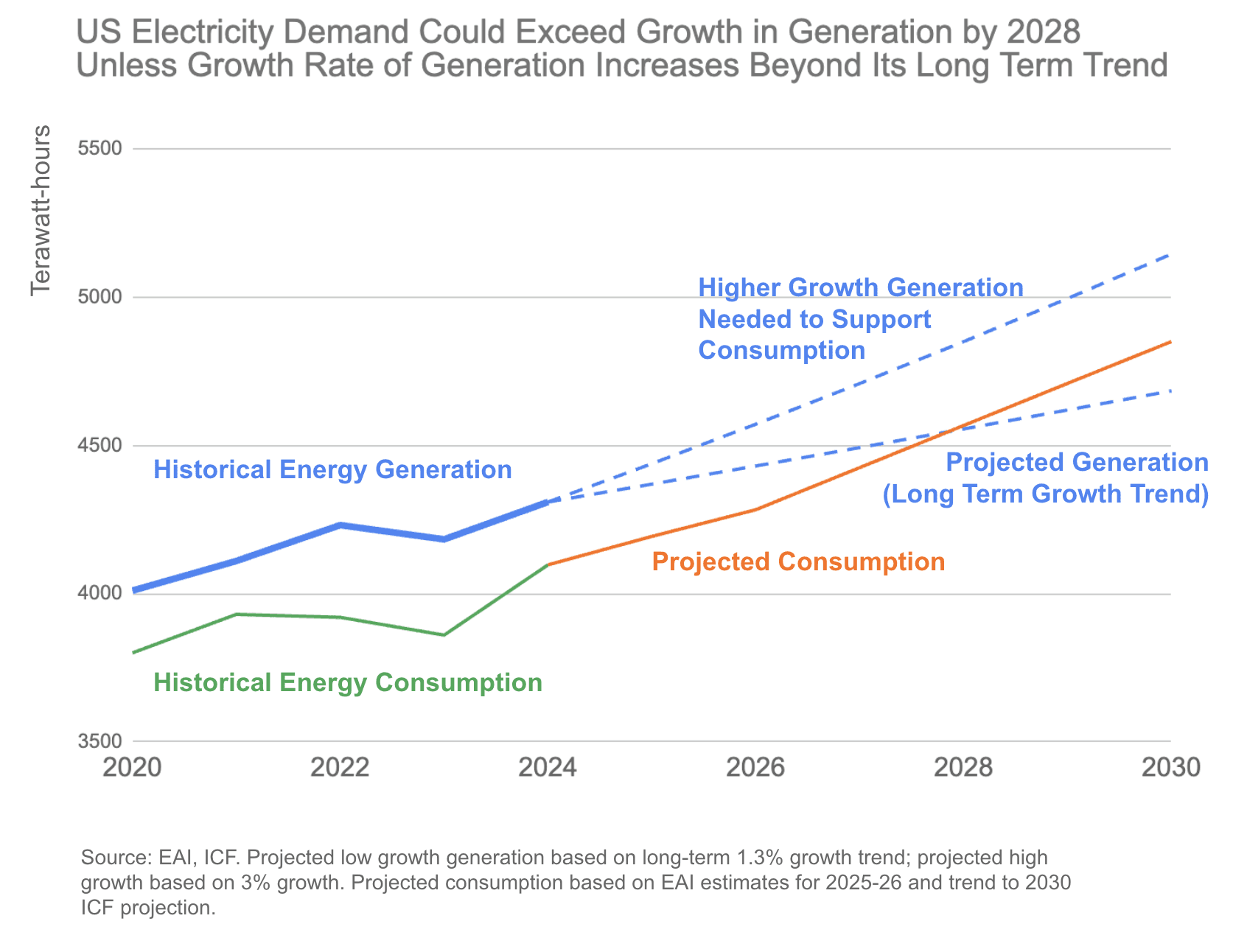
US electricity demand may be growing faster than our ability to supply it.
According to the International Energy Agency (IEA), global data centers, fueled largely by AI workloads, could consume up to 1,700 terawatt-hours (TWh) annually by 2035 in a high-uptake scenario. That’s roughly 4% of the world’s projected electricity generation under current policies (around 42,766 TWh total). Even in a base case, it’s about 1,200 TWh, or 2.8%. AI isn’t just growing - it’s exploding, and it’s the primary driver behind this surge.
Renewables are ramping up fast to meet this demand. The IEA forecasts renewable electricity production could hit 24,930 TWh by 2035 in their Stated Policies Scenario (58% of total generation), or even 39,128 TWh in a Net Zero pathway (78%). That’s a tripling from today’s levels, driven by solar, wind, and other clean sources. Unfortunately, other net-new energy sources – particularly natural gas and modern nuclear plants that are now in planning stages – have much longer lead times and can’t ramp as easily.
So can this renewable boom keep pace with AI’s insatiable hunger? If infrastructure bottlenecks, grid limitations, or slower-than-expected efficiency gains hit us, we could face strain on power systems - think rolling blackouts or skyrocketing energy prices that cripple innovation. In fact, here in Loudoun County, VA - home to the world’s largest concentration of data centers - the grid is already feeling the strain. Utilities have warned that new AI-driven power demands are pushing transmission limits and slowing data-center expansion. And then there is consumer impact to consider. How will the public react if it becomes clear to them that AI data centers are driving up their utility bills? There is some evidence that this is already becoming a public concern – Google recently stopped development of a proposed data center in Franklin Township, Indiana, in September 2025 after significant public opposition, citing concerns about water usage and electricity prices.
At CogniwareAI, we’re tackling this head-on. Our software helps enterprises slash AI infrastructure costs and power needs by half. Let’s build a sustainable AI future – reach out to us if you’re ready to optimize.
What do you think? Are blackouts inevitable, or can tech like ours turn the tide? Drop your thoughts below!
#AIInfrastructure #EnergyEfficiency #DataCenters #GenerativeAI #SustainableAI
